I heat up my sauna perhaps 200-250 times a year. My barrel sauna came up with a Harvia KIP 6kW stove. After about 400 heat cycles, one of the coils failed. Luckily spare parts are available and replacing the coil is not all that difficult. A new coil costs about $80 and there are three coils in that stove. However, a few months after the second coil blew up and a few months after, the third one.
To my surprise, the build quality of that Harvia stove wasn’t that great. It had rusted somewhat. Some research showed that failing coils are not that uncommon and sauna-goers have had issues with other brands too.
I started thinking of getting a new stove. Unfortunately, manufacturers are charging arm and leg for new stoves in the U.S. A brand new Harvia KIP goes for about $900. Similar stoves cost about $250 in Finland, if that.
One thing I noticed with Harvia KIP was that it was actually made in China. A friend of mine had actually replaced his stove with a Vevor stove, also made in China. His sauna did not burn down and everything seemed to be working just fine, so why not give it a go.
Why Vevor?
I must admit that I decided try this Vevor stove for three reasons:
- They advertised that their coils are made of stainless steel. Unfortunately coils used by many mainstream brands are not made out of stainless steel.
- I find it difficult to pay $900 for a $200 mass-produced product. Just because I know the stoves are overpriced in the U.S., I decided to sacrifice löyly experience in the altar of providing the vivid U.S. sauna community a new POV.
- I figured that the worst case, the stove fails quickly or does not deliver good steam. Not too expensive experiment either way.
Ordering and shipping process
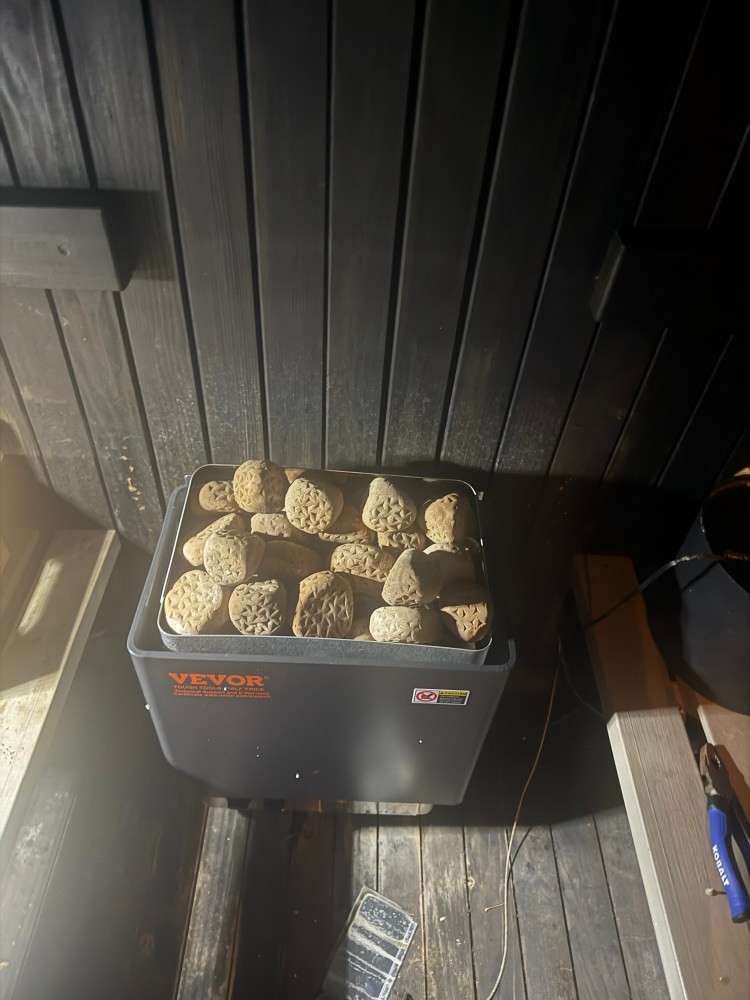
I ordered a basic 6kW Vevor stove from their website. The cost was $140 including sales tax and shipping and the delivery arrived in four days from order. At a first glance, the stove looked very similar to any basic 6kW stove: timer and power controls in the front, three coils, and a mandatory sticker telling that the stove might get a bit hot. Vevor marketing team beats other brands 6:0 with their slogan: tough tools to your sauna everybody!
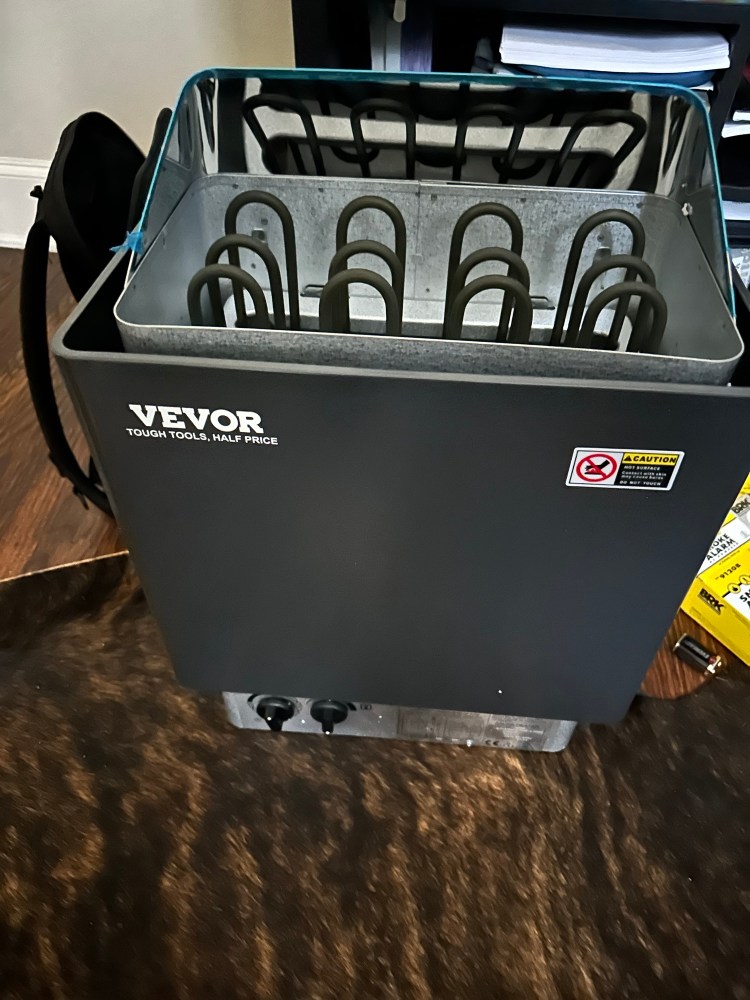
I noticed one key difference to Harvia KIP though: the rack preventing stones from falling too low was placed much higher in this stove. In Harvey, that rack is about 4 inches lower. It seems though that you can lower the rack if you want. I paged through the manual and decided to leave it where it is. I know that this would mean less stone capacity, but let’s play by the rules.

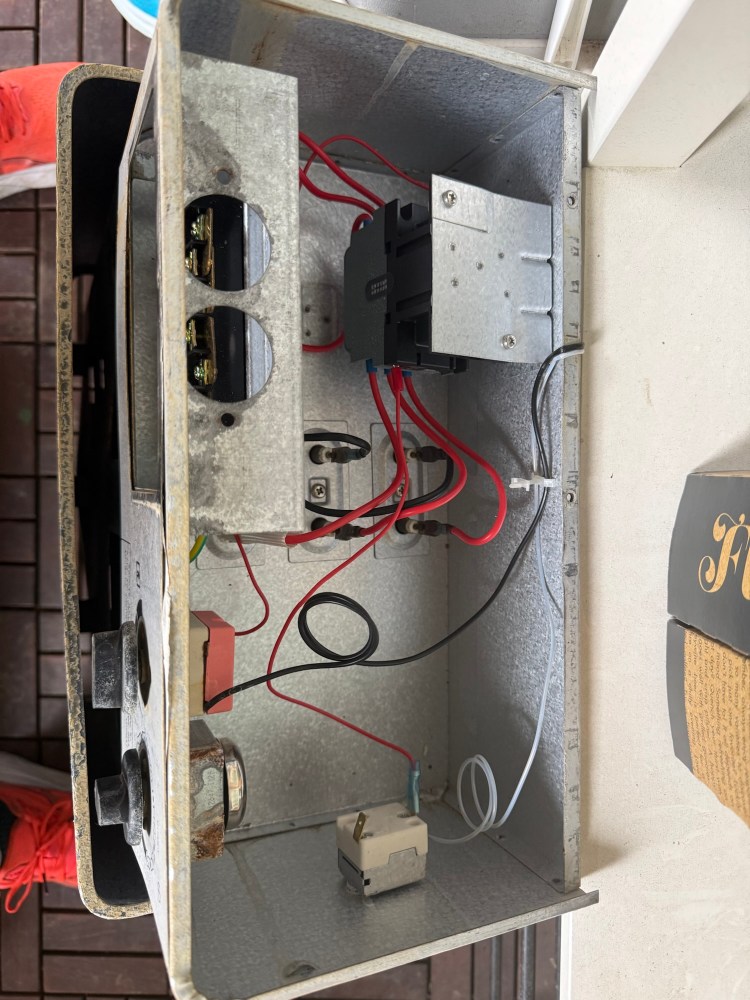
Wiring the new stove was very straight-forward: two lines in and ground. It was also quick to figure out the rest of the logic: one line in to the timer clock and another out, same for the power adjustment, and then third line to the breaker. The contractor was very similar to what I had in my Harvia stove so all the wiring made sense. The picture below looks a bit chaotic. I don’t think anyone in their right mind would consider replacing the manual pomodoro-like timer with a WiFi switch…
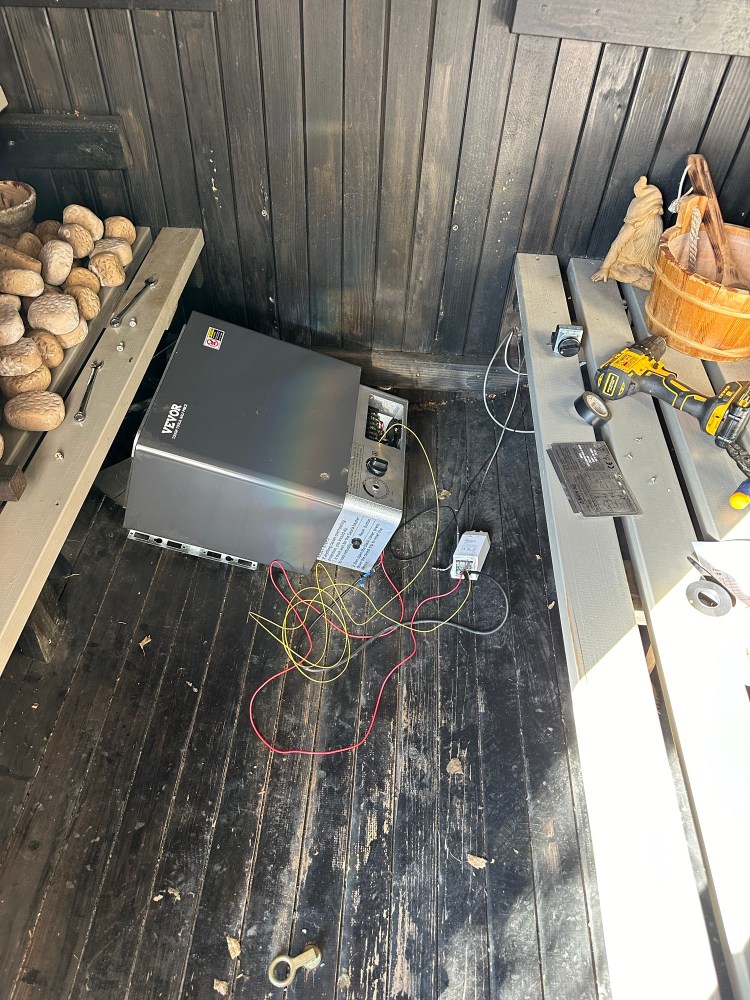
After maybe an hour or so, the new stove was installed and heating up. I use ceramic stones in my sauna and I think this Vevor absorbed about 15 kilos of them whereas Harvia would take about 20 kilos.
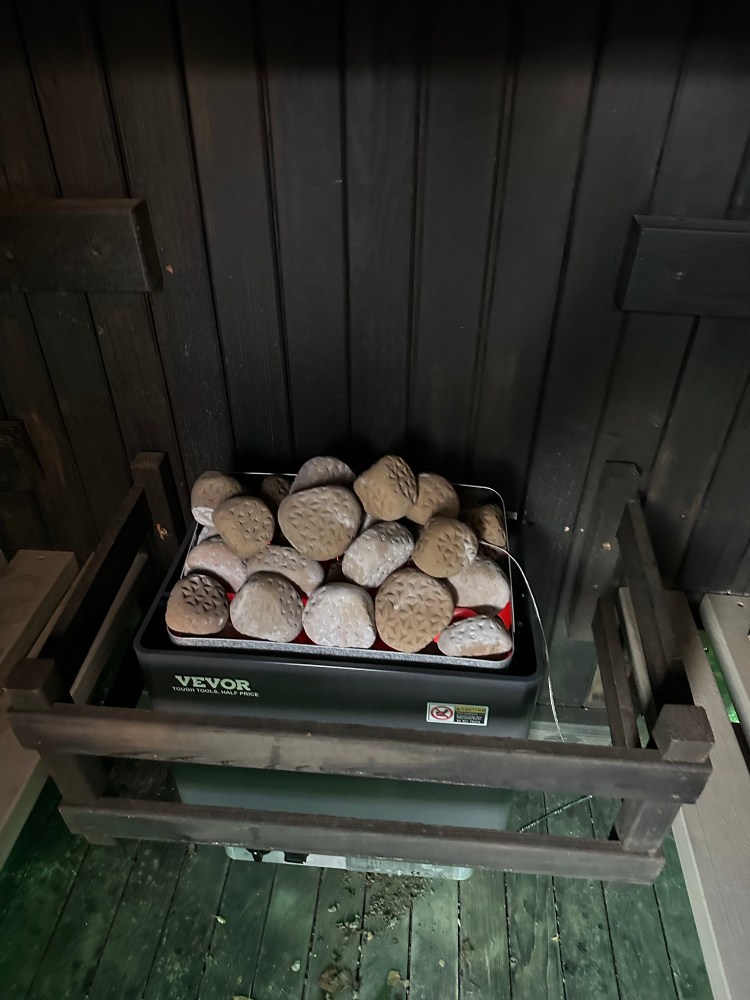
The löyly experience
The heat up time in this Vevor is slightly faster than in Harvia. I think it might be because there are fewer stones so the air circulates better. The difference is minimal though: I’d say that Vevor gets ready in about 30 minutes and Harvia took maybe 10 minutes more.
Techy as I am, I have also measured the difference in air humidity after the stove switch. I cannot really say there is any: both Harvia KIP and this Vevor provide similar steam (löyly) and the absolute humidity hits over 100g/m3 (see the Humidity and Löyly Index and Improving Ventilation in a Barrel Sauna articles if you want to understand more).
Experiences after 100+ heat cycles
As I am writing this blog in June 2024, I have heated up the Vevor stove a little over 100 times. It is not yet fair to conclude anything on the durability of the stove or the coils.
The first heating element fails after ~400 uses
Quite precisely after two years and ~400 uses, the middle element failed. It seemed that the metal sheath of the element had burned through. Very similar failure that I had seen with my previous Harvia stove.
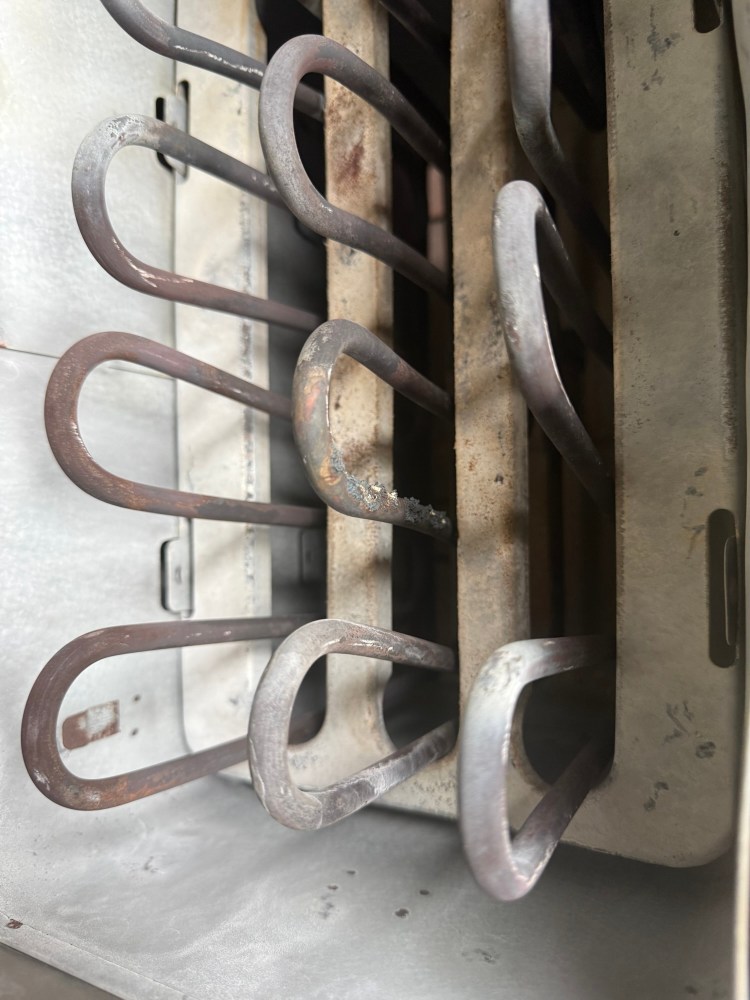
Otherwise, the stove looked good as new: no signs of rusting:
I could not find spare heating elements easily, so I decided to replace the entire stove. The new one looked identical. Only the color of the badge had been changed from white to orange, but luckily one of the best slogans for any sauna brands was kept 🙂
Now I have two elements from the old stove as spare parts, but assuming that this new stove also lasts about ~400 uses, I’d say that Vevor is good value especially here in the U.S. where European stove brands are so extremely marked up.
 Hakka-Sauna