Ceramic sauna stones are rather popular in public electric saunas in Finland nowadays. The main reason is that they are more durable and that they extend the lifetime of the heat elements.
I have now used them for about 50 heat cycles in my sauna and I can recommend using them especially in small electric saunas. Below are the pros and the cons and then, as always, lengthy discussion about the subject.
Pros:
- Much easier to install than regular stones: won’t bend the elements
- The stones heat up about 20% quicker to target temperature
- No dust on floor and cleaner air
- Minimal maintenance
- Extends lifetime of heating elements
- Better löyly
Cons:
- About 5x more expensive than regular sauna stones
- The stones cool down faster after pouring water on them
- Difficult to buy in the U.S.
- Less traditional looking
Acquiring Ceramic Stones
After vigorous 10 minutes if googling, I found out that nobody was selling ceramic stones in USA. There were a few online stores that would ship to USA, but the delivery times seemed to be months and the shipping fees were $150-200. That is a bit too steep for a $100 product.
However, my hugely popular blog has attracted fans from all over the world, including Pekka from Pönttöpalvelu. Pekka is an active volunteer in multiple sauna associations in Finland and he was also one of the steering group members in the “Sauna culture in Finland” to Unesco’s Cultural Heritage list campaign in 2020.
Pekka’s business focuses on all kinds of sauna related stuff and he happens to sell Kerkes ceramic stones. So, I contacted Pekka and asked him to ship 20 kilos of these goodies to my brother’s place in Tampere.
I then figured that we would have a business meeting in Portugal and some of my Finnish colleagues would be traveling there , I might as well just ask a little favor and ask someone to bring me some sauna accessories. Little did my colleague know that he actually signed up to bring a 45-pound box. As he checked the box in at the airport, the airline personnel wasn’t sure if ceramic rocks were on the same list of restricted items with lithium batteries and moonshine. Turns out, that transporting rocks in checked in luggage is ok.

The cargo made it successfully from Tampere to Lisbon, but on my return journey to Dallas, I found out that the box could not withstand gentle handling of luggage. As I was changing planes in Madrid, airport personnel entered the plane before takeoff and asked if I had some rocks with me. They said that many of those stones now decorate the runway but they collected as many as they could find and re-boxed them. In Dallas, I found out that maybe one fourth of the stones made it to the Lone Star State. American Airlines generously reimbursed the damage, but overall this transportation saga was a bit bummer. Later, I thought that passengers next to me were probably a bit confused when they heard that bro is hauling rocks in his luggage like some archeologist.

Luckily, I had my next Finland trip planned for a few months later and Pekka agreed to wrap the box better this time. No issues this time.
Installation
You can order ceramic stones in a few different shapes and sizes. With good planning, you can get exactly the right sizes and shapes to fit between the elements without bending them.
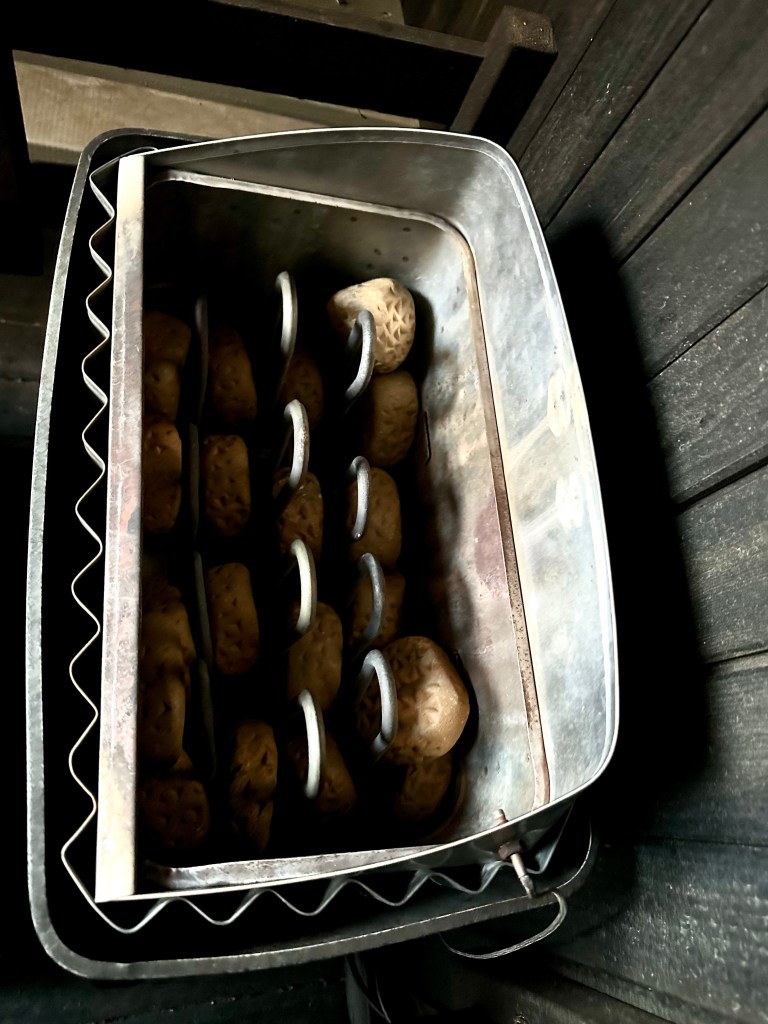
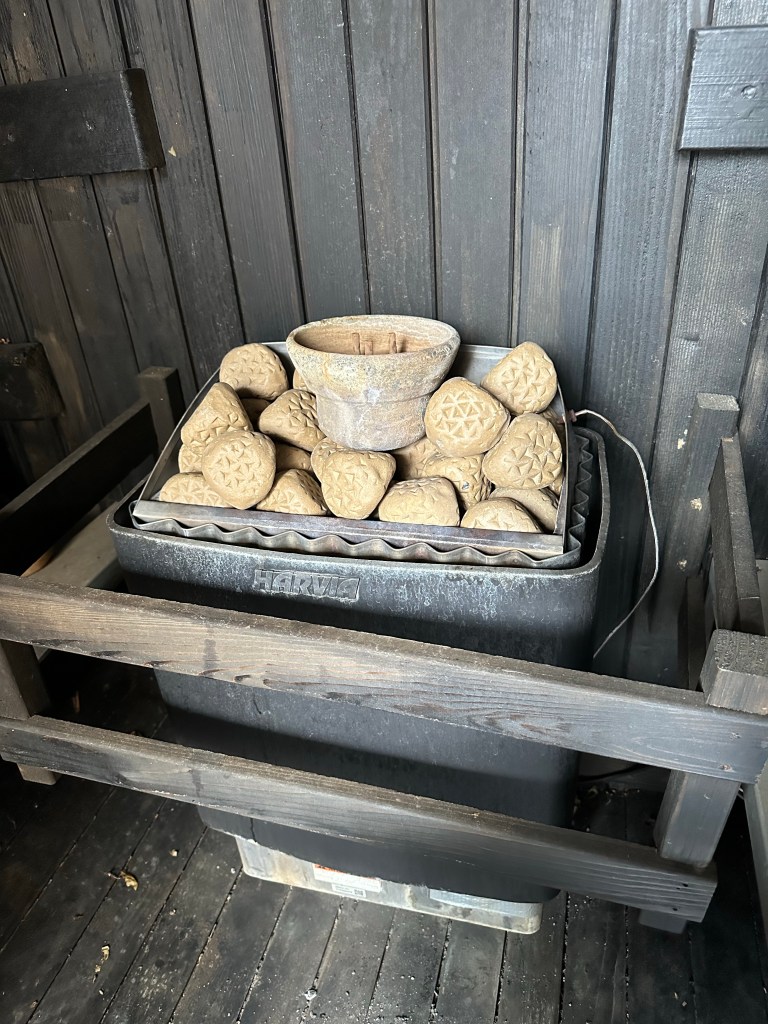
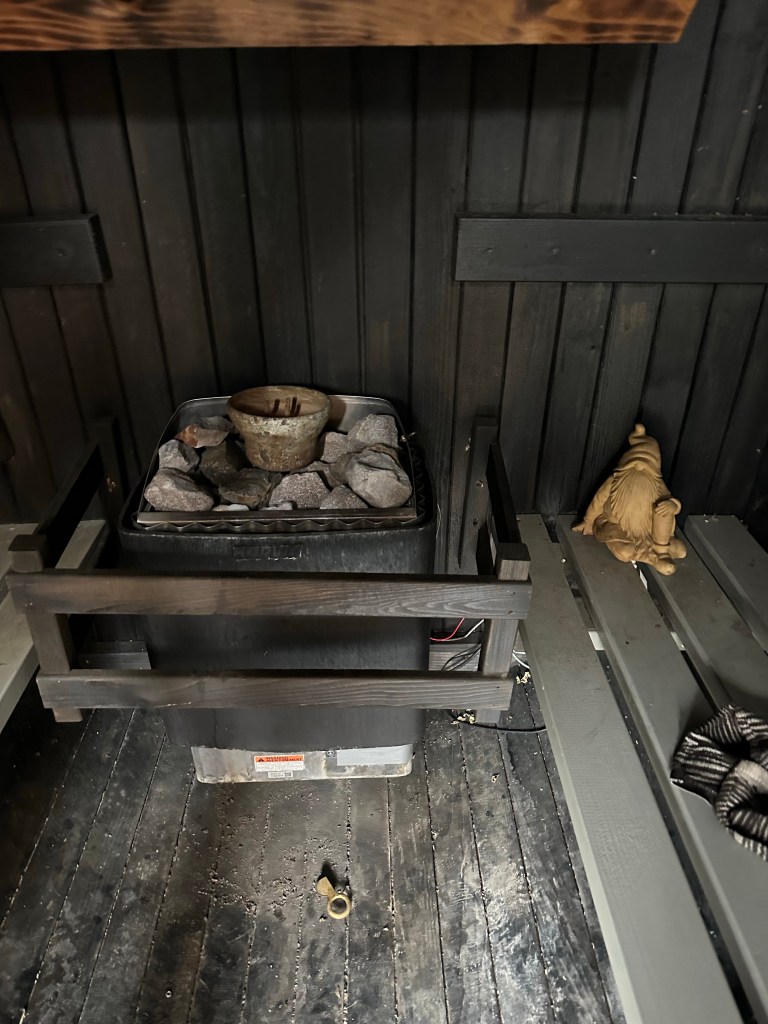
The Kerkes stones aren’t mimicing regular stones in color or shape. It is subjective, which ones look aesthetically more pleasing.
Heating up and löyly features
I have found out that I get ideal steam in my sauna when the rocks reach temperature of about 250 C. I have placed a thermometer that touches one of the top stones and based on that data, it seems that ceramic stones heat up about 20-25% faster than regular stones. This is relevant for a two reasons:
- My sauna gets to 50c before heating on hot summer days in Texas. With ceramic stones, I get the sauna bathing ready quicker and so that the room temperature doesn’t increase to unbearable.
- Shorter heat-up means lower energy consumption and, at least theoretically, fewer operating hours of the stove.
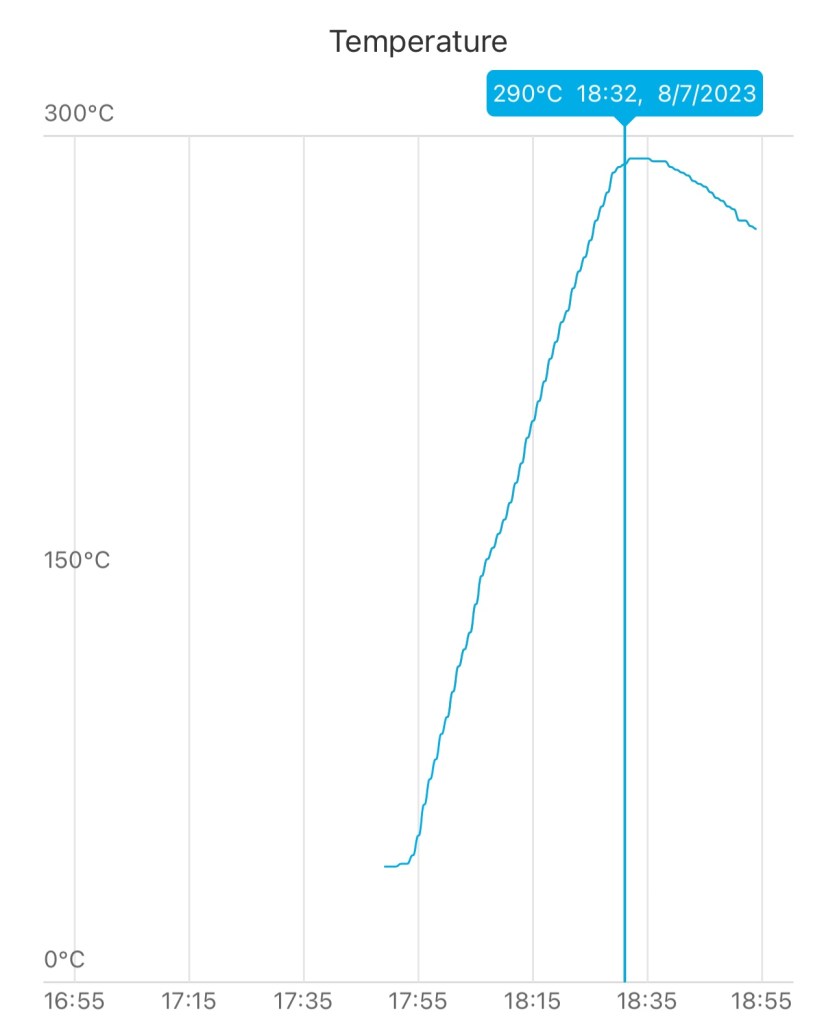

I would also say that it takes more water to create the same steam in my sauna now. The steam (löyly) itself is softer and more to my liking that way. It seems that absolute humidity is a bit higher on average during my sessions now than before, probably because I use more water.
Maintenance
Kerkes stones come with a five-year warranty for home use. In Saunologia’s test the ceramic stones also crumble eventually, but much later than regular stones.
What I have found is that I no longer have any stone dust on the floor, which is nice. This probably also means cleaner air in my small sauna.
With regular sones, I’ve found that I had to replace about 20-25% of the stones every year. Moreover, that stone dust from crumbled stones gathers around the heating elements, which kills them faster. I lost one heating element after maybe 400 uses. Interesting to see if these new stones mean longer lifetime for the elements. It should.
Conclusions
If you can get ceramic stones at a reasonable price point, I would definitely go for them. If you have pillar stoves with 100 kgs or more stones, or a big smoke sauna, the replacement cost gets high and it might be difficult to justify the cost.
The steam in small electric saunas tends to be harsh and ceramic stones are an inexpensive way to improve make the steam gentler and allow you to use more water and thus increase humidity in the room. Using ceramic stones also allows you to heat up the rocks without getting the room too hot. Many sauna users especially in the U.S. seem to be obsessed to get their saunas to 200F and even above like the higher temperature would automatically improve the experience. In my sauna, the sweet spot is around 65-70c (150-160F). At that temperature, I can add plenty of steam and use whisks.
 Hakka-Sauna